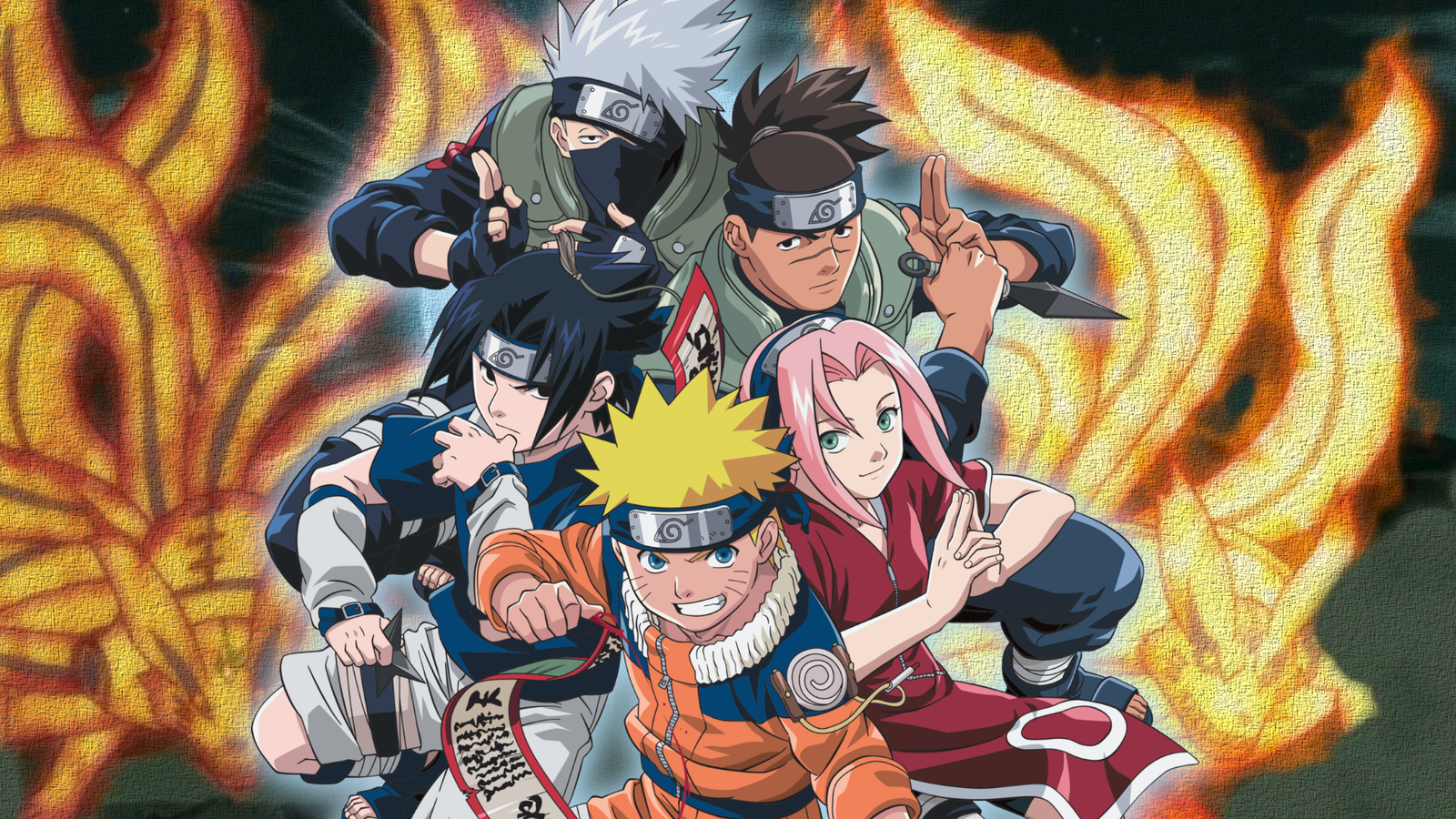
For countless fans worldwide, watching Naruto was a formative experience as a child or teenager. Its sweeping narrative weaves together tales of devotion, redemption, and difficult emotions like envy and loss—these stories have always resonated deeply with its core shōnen demographic and shaped the way its fans see the world. As one grows older, though, some of Naruto‘s most inspired moments reveal themselves in a way that feels more like an old friend giving sage life advice than didactic storytelling aimed at children and teenagers.
In anticipation of Naruto‘s long-awaited anniversary episodes, it’s time to revisit the series and see what it has for those who grew up with it. As it turns out, Naruto actually has some profound things to say about adult life: from bureaucracy and mundane daily life, to navigating complex political and social situations, to the stark realities of simply growing older, Naruto offers potent food for thought about the things adults feel and experience. In fact, many of the moments which hit hard as kids start to hit even harder as adults.
“Does That Person Really Behave Like You?” (Naruto Uzumaki)

Among Naruto‘s most impactful quotes ever is one about the tragic lifecycle of shinobi; this philosophical line was established as early as Naruto Episode 19 in an emotional exchange between Naruto and Zabuza following the death of Haku, the latter’s companion. Seeing Haku’s corpse being kicked by Gatou, Naruto becomes incensed at Zabuza’s seeming lack of a reaction. Zabuza, in turn, describes himself as a shinobi for whom Haku was merely a tool, maintaining his steely disposition until Naruto gets him to crack with one killer Talk-no-Jutsu session:
“You really… honestly… don’t feel anything at all? […] When a person becomes as strong as you… does that person really behave like you? He threw his life away for you! […] He didn’t even fulfill his own dreams and yet… to die as a tool…! That’s… That’s… too painful…”
In turn, Zabuza responds that his own effort to deny his affection toward Haku was a lie, and that shinobi are more than merely tools—before requesting Naruto’s kunai to take Gatou down himself.
“Kid… Don’t say anything… anymore. Haku was… he wasn’t just thinking of me. He was feeling pain inside for you while he battled you guys too. I know. He was too kind… I’m glad we could fight with you at the end. Yes, little punk, it’s as you say, after all… shinobi are human too. Maybe it’s impossible to become an emotionless tool. I’ve lost. […] Kid, give me the kunai knife!”
This imbalance and difficulty resonates deeply in adult life. Now, especially, it’s easier than ever to feel isolated, as though one is just another cog chugging along in the machine—and it’s uncomfortable to say, but most of the time, one is. That frame of mind becomes so deeply ingrained and normalized that it becomes a fact of life like the sky being blue.
Adult life often becomes a matter of chasing milestones: promotions, partners, finding a house (or stable housing), careers, finishing college, the list could go on ad nauseam. In all of those, one is striving to fulfill a certain role and expectation. These roles and expectations start to feel as essential as oxygen, and fashion the whole way one moves through the world. A reciprocal cycle spins out, and one starts to see one’s entire value as a human becoming predicated on metrics, performance, and milestones. Furthermore, the internalized dissatisfaction with perceived failure can become crushing. Dehumanization becomes one’s whole humanity.
Zabuza dealt with his grief by hardening, leaning into shinobi’s characterization as mere tools (a theme constantly revisited in the series). But critically, he shows the possibility of reflection, too; he doesn’t just cry out of grief—he cries also because he lets himself tap into his own humanity again, refusing to keep treating life’s hardest emotions, like grief, as a liability to a role. From there, he claims agency over his life, even if only for a moment in a blaze of glory.
“All Humans Live With The Wrong Assumptions.” (Itachi Uchiha)

In the game of cat-and-mouse leading up to Sasuke’s final confrontation with Itachi, the pair share an exchange in Naruto Shippuden Episode 138, where Itachi leads Sasuke to believe that Madara is still alive. Threatened by the possibility, Sasuke recoils; Itachi then responds with one of Naruto‘s greatest quotes, touching on experience, knowledge, and reality.
What makes this quote particularly poignant is the fact that Itachi, even at that moment, was actively weaving a certain reality for Sasuke by continuing to pretend that he looked down on Sasuke and committed the Uchiha massacre out of sheer vengeance, proving the principle in motion.
In order to survive, we cling to all we know and understand. And we label it reality. But knowledge and understanding are ambiguous. That reality could be an illusion. All humans live with the wrong assumptions. Isn’t that another way of looking at it? […] It’s only your assumption that Madara is dead. In exactly the same way you once assumed that I was your kind older brother.
It seems pretty self-evident to say that everyone has their own interpretation of events and what is true, false, and meaningful. However, being mindful of that fact becomes all the more important as one grows older—not necessarily for the purposes of keeping oneself in check, but for the purposes of infusing one’s outlook with agency and purpose. Itachi makes this point in a very interesting way in his use of the word “cling”: people cling to what they know and understand to be reality.
He turns that observation directly onto Sasuke by even constructing his assumptions here, continuing right up to the moment of his death. Itachi’s death shatters Sasuke’s worldview, and is the turning point for Sasuke’s depth as a character. When the goal he sought for so long—killing Itachi—turned out not to be the resolution he expected, and in fact only led to more and more of his reality shattering around him. He had to constantly adjust his worldview and assumptions afterward, and he had to develop the fundamental ability to critique his own assumptions even if it’s uncomfortable.
This idea that one has to adjust constantly to those moments is foundational to adult life. After all, the term “well-adjusted” implies the ability to adjust in the first place. As an adult, it’s easier to see that Itachi gave Sasuke a gift that could only come with a few more years of life: the ability to play an active role in what one attends to, invests oneself in, and fights for.
“As Long As You’re Alive, You Need A Reason.” (Gaara)

In the aftermath of Naruto‘s most legendary battle with Gaara facing Rock Lee in the Chunin Exams, he’s caught by Naruto and Shikamaru in Lee’s hospital room trying to kill him. Talking about his deeply traumatic upbringing and his family, Gaara describes himself as a fine-tuned weapon of war, before going on to say the following:
To them, now I’m just a relic of the past that they want to see disappear. So what did I have in this life, why did I keep living? When I asked myself that, I couldn’t find the answer. But, as long as you’re alive, you need a reason. If you don’t have one, it’s the same as being dead. So this is the answer I came to: I am living in order to kill human beings other than myself. After living in the fear of never knowing when I might be murdered, finally I became calm. By killing assassins, I finally comprehended the reason why I live. I live fighting for myself and loving myself. And if I see that all other people in this world exist only to make me realize that, there could be no world more beautiful. And as long as there are others to kill who can make me feel this happiness to be alive, I will never disappear.
While Gaara is clearly presented as the villain, what he says still has a lot of weight when revisiting the series as an adult. The important distinction here is the question of purpose itself. For Gaara, as a child, his purpose was defined as violence; it’s only when he’s older—a fair bit past the point of this episode, in fact—that he’s able to define his own purpose. He later goes on to be the person who rallies the troops ahead of the Fourth Great Ninja War.
Both the purpose he was raised with and the purpose he would choose for himself are purposes that can give meaning to life itself, but Gaara unknowingly lays the groundwork to define his own life and its meaning later on. He channels that existential principle into a way of living that’s far more productive for himself, his “happiness to be alive”, and the world around him.
“How Is It Fair To Let Only You People Preach About Peace And Justice?” (Pain)

“Pain’s Assault” is universally considered one of Naruto‘s best arcs, and its climax comes when Naruto and Nagato, via the Deva Path (constructed from Nagato’s childhood friend and comrade Yahiko), have a heated exchange on the battlefield—the only exchange in Naruto‘s history that has left the occasionally-preachy main character entirely silent. While there are countless nuggets to be mined here, sometimes the obvious one is the best choice.
After Naruto describes Pain’s assault which killed Jiraiya, mortally wounded Itachi, and left Konoha in shambles, he indignantly tells Pain that he doesn’t want to hear him speak about peace and justice. Nonetheless, Pain responds:
What about my family? My friends? My village? They suffered the same fate as this village at the hands of you Hidden Leaf ninja. How is it fair to only let you people preach about peace and justice?
Even as a child, Pain’s quote is immensely important and gingerly gives an actually fairly complicated lesson about geopolitics, oppression, repression, and resistance. But what’s interesting is that, as one grows a bit older, it takes on another timbre, too: the play of power in everyday life. The power to be the one who writes the rules and decides what big concepts like “peace”, “justice”, “fairness”, and “morality” even mean often becomes far more visible when it’s at its most mundane.
A bureaucrat having a bad day can refuse to stamp off on a process that’s taken months; landlords and HOAs can be frivolous, petty, and even cruel; and of course, even personal relationships can become deeply soured by these imbalances. It’s all the more important, too, because when one recognizes they are (or can be) in a position to dictate what and who is right or wrong, it provides the opportunity for grace, empathy, and solidarity.
“We Can’t Be Brats Forever.” (Shikamaru Nara)

All of this has gone a long way to express the importance of interpretation and perspective in adult life. That’s critical, because as one grows older, often one starts to question what it means to live a meaningful life, and Naruto clearly serves as a great vehicle for those questions: so far, it’s smuggled in lofty debates about who gets to dictate justice, what the idea of purpose even means, how it feels to be a cog in the machine, and how one’s perspective on the world changes everything.
Every midlife crisis has started off with a nagging existential question. Interpretive finesse and a curiosity for different perspectives are what’s required to even begin to tackle the question of a meaningful life when one has to actually live in the world. That’s why it’s important to drag things back down to Earth with the legendary response Shikamaru gives to Naruto in the wake of Jiraiya’s death in Naruto Shippuden Episode 153. Relating it to his own experiences of grief, Shikamaru encourages Naruto to use his grief as a motivating parting gift, rather than a reason for the world to stop.
I lost my teacher, so it’s not like I don’t understand what you’re going through… but whining and sulking isn’t going to make things better. We’re way past that point in our lives. […] My teacher entrusted me with many things. Some important, some petty. All sorts of things. You too, right? In fact, you must have a ton of stuff. So don’t you think it’s about time for us to step up? […] Time for us to become the ones who entrust. It’s a pain, but we can’t keep complaining. You will eventually be the one treating to ramen, and you’ll be called Naruto-sensei, or something. We can’t be brats forever… if we wanna become super cool ninja like Asuma and Lord Jiraiya, that is.
As a child, the easiest and simplest interpretation is that Naruto and Shikamaru were entrusted by Asuma and Jiraiya with a vision of the world that they have to realize and pass on. As an adult, the question shifts: it’s no longer about what one was entrusted with, but what world one wants to entrust (and to whom). At its core, Naruto has always been a story about the assumptions, conflicts, and burdens one inherits—but Shikamaru’s quote reveals a whole other layer that becomes all the more clear as the two grow up themselves.
Both Naruto and Shikamaru, shaken and driven by the deaths of their respective mentors, step up to become major shinobi leaders, but both late Naruto Shippuden and Boruto show that they’re not as interested in recreating the shinobi world they inherited as they are in creating a better world for their successors to inherit. Shikamaru’s quote isn’t simply about responsibility or duty, but also about using life’s hardest emotions as a motor to create the world one wants to live in: the responsibility of being in the world is to create it well and pass it on.
It’s the perfect capstone to describe Naruto‘s evergreen value for its fans: it’s a series that ages like wine, gaining layers and complexity alongside life itself. It has mounds of profound moments that resonate and guide viewers of all ages, but the ability to go back and reinterpret it with a lot more experience under the belt transforms Naruto‘s greatest moments into deeply practical lessons that are even more beautiful than before.
- Video Game(s)
-
Naruto: Clash Of Ninja Revolution 3, Naruto: Ultimate Ninja (2003), Naruto Shippuden: Ultimate Ninja Storm Generations, Naruto Shippuden: Ultimate Ninja Storm 2, Naruto Shippuden: Ultimate Ninja Storm 3, Naruto Shippuden: Ultimate Ninja Storm 4, Naruto: Rise Of A Ninja, Naruto: The Broken Bond, Naruto to Boruto: Shinobi Striker, Naruto Shippuden Dragon Blade Chronicles, Naruto: Path Of The Ninja, Naruto x Boruto: Ultimate Ninja Storm Connections
- Cast
-
Junko Takeuchi, Maile Flanagan, Noriaki Sugiyama, Chie Nakamura, Kazuhiko Inoue, Nana Mizuki, Hideo Ishikawa, Yûko Sanpei
- Latest Film
-
Boruto: Naruto the Movie