What is pop music? Musicologists Nate Sloan and Charlie Harding argue in their book, Switched on Pop, that “pop isn’t a genre; it’s a marketing category that encompasses everything that is commercially successful, regardless of sound”. Pop music, then, is defined by the capital it generates, so many regard it with suspicion. Still, its distinct pleasures and everyday uses make it an especially worthy field for scholars and critics to investigate.
However, until this century, pop music received little critical attention, let alone praise. In the 1970s, Charles Hamm, Alec Wilder, and Ian Whitcomb wrote historical books on American pop. In the following decades, the late critic Dave Marsh championed a pop paradigm that prioritized singles over albums.
The 21st century has changed the relative dearth of books on pop. The climate for pop music writing is infinitely more vibrant in the digital age, debates around rockism and poptimism notwithstanding. Many books survey popular music broadly, especially in the US, but fewer focus specifically on pop.
The selected books’ authors write about pop and its contexts with aplomb, even when some define themselves as pop outsiders. In addition to less strong books, I didn’t list multiple superb books that didn’t count because they lacked a specific focus on pop. In the latter category, Ann Powers’ Good Booty: Love and Sex, Black & White, Body and Soul in American Music; Kelefa Sanneh’s Major Labels: A History of Popular Music in Seven Genres; and Rob Harvilla’s 60 Songs That Explain the ’90s merit special mention as essential reads.
These ten books are not a poptimist syllabus, but they represent some of the best music writing of the 21st century on pop music. They scrutinize the most popular, not always the most acclaimed, music as worthy of serious inquiry and analysis, and some are even fun for novices to read. I rank them by personal preference as a music historian and outsider to pop’s mainstream, but all are worth reading.
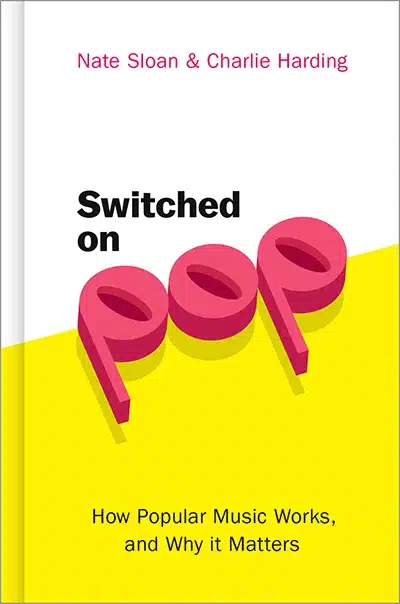
10. Switched on Pop: How Popular Music Works, and Why It Matters – Nate Sloan and Charlie Harding (Oxford University Press, 2019)
In Switched on Pop, musicologists Nate Sloan and Charlie Harding, admitted outsiders to pop, enhance readers’ understanding of 21st century pop and its pleasures through music theory that’s easily comprehensible for novices. Sloan and Harding analyze not only rhythm and melody, but also underexamined aspects of pop like hooks, beat drops, and sampling. The result is a series of excellent close readings of 21st-century pop songs.
An enjoyable read, Switched on Pop is more inviting to the average reader in its enthusiasm than more scholarly or critical work. If there’s one book that encompasses the best kind of literature on 21st-century pop, this is it.
9. Love for Sale: Pop Music in America – David Hajdu (Farrar, Straus and Giroux, 2016)
With Love for Sale, critic David Hajdu wrote one of the most accessible chronicles of American pop history. His points are sharp and witty, and he periodizes trends–the album, the singer-songwriter, and the music video receive chapters devoted to their rise–instead of surveying key artists, with an unusually personal focus.
The book is less in-depth than most on this list, but its pithy perceptiveness makes it a gem. With its arguments against Auto-Tune technology, Love for Sale might strike readers as a boomer’s view of American pop, but the book is excellent and evenhanded throughout.

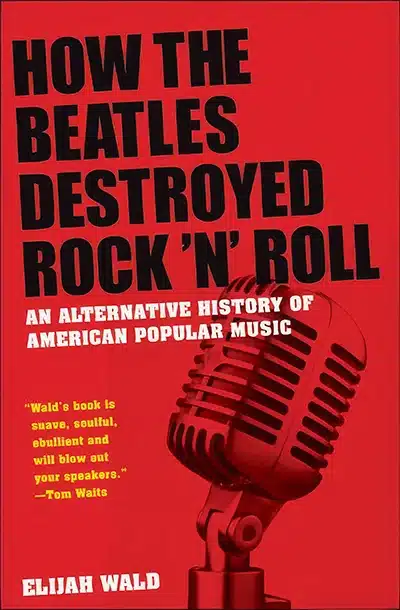
8. How the Beatles Destroyed Rock’ n’ Roll: An Alternative History of American Popular Music – Elijah Wald (Oxford University Press, 2009)
Admittedly less ideal for the casual pop fan, music historian Elijah Wald’s grossly mistitled How the Beatles Destroyed Rock ‘n’ Roll is nonetheless one of the most important books about pop ever published. In his “alternative history”, Wald presents an advanced but highly readable perspective on how music history gets told. He highlights American music literature’s overemphasis on rock and jazz and stresses that history and criticism approach American pop very differently.
Wald’s book examines trends in the music industry from 1890 to 1970 ahead of commonly prized artists. His chapter on the discarded yet hugely popular bandleader Paul Whiteman convincingly establishes his significance. His insights on race, technology, and dancing reveal exceptional insight into American pop and how its story is typically told. Ideal for music aficionados who question common narratives, How the Beatles Destroyed Rock ‘n’ Roll is a strong 21st-century book on pop music history.
7. Let’s Do It: The Birth of Pop Music: A History – Bob Stanley (Pegasus Books, 2022)
Musician Bob Stanley has not one but two massive books on this list, and though I found Let’s Do It less thoroughly engaging, the book is a masterful deep dive into pop music and its industry, especially the pre-rock era. Full of entertaining anecdotes, Stanley’s writing is fun, inordinately enthusiastic, and comprehensive.
Although it’s easy to disagree with Stanley on many of his arguments, they are consistently well-founded, fascinating, and joyful, and the book’s takes on Irving Berlin, Duke Ellington, Judy Garland, Billie Holiday, Frank Sinatra, and midcentury vocal jazz are just a few of the gems. Let’s Do It, as in, let’s read this book? Absolutely.

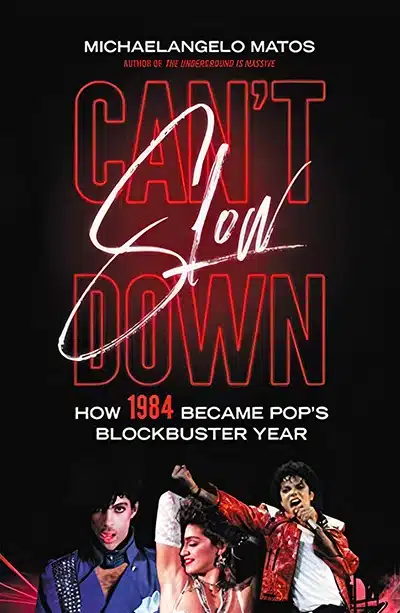
6. Can’t Slow Down: How 1984 Became Pop Music’s Blockbuster Year – Michaelangelo Matos (Da Capo, 2022)
In Can’t Slow Down, journalist Michaelangelo Matos employs copious research to uncover the story of a year that changed pop. Matos presents the background on key moments in 1984 across genres–including country, punk, indie rock, house, jazz, juju, and salsa–but with pop front and center. He also examines the role of radio and MTV, with the narrative full of strong quotes and plentiful compelling anecdotes.
Detailed–even exhaustive in its coverage of that year’s Grammys and mega events like Band Aid and Live Aid–but highly readable, Can’t Slow Down is one of the best music books of this decade and a treat for connoisseurs of the era of Michael Jackson, Madonna, Prince, Phil Collins, Lionel Richie, and so many more.
5. Glitter Up the Dark: How Pop Music Broke the Binary – Sasha Geffen (University of Texas Press, 2020)
Essential for rethinking common music narratives, especially around gender, Sasha Geffen’s Glitter Up the Dark engages with the gender dynamics of voices and technologies that have altered the pop music landscape. Focusing on the 1960s through the 2010s, Geffen writes and proves that “there’s no pop music without artists who reveled in lashing out against the gendered expectations levied upon them from on high”.
Moreover, Geffen produces some of the sharpest, most perceptive analysis in any music book from this century, and the range of styles–including hip hop, grunge, glam rock, and women’s music–represented through a consistent lens of gender transgression in pop yields one of the most fascinating music books I’ve ever read.

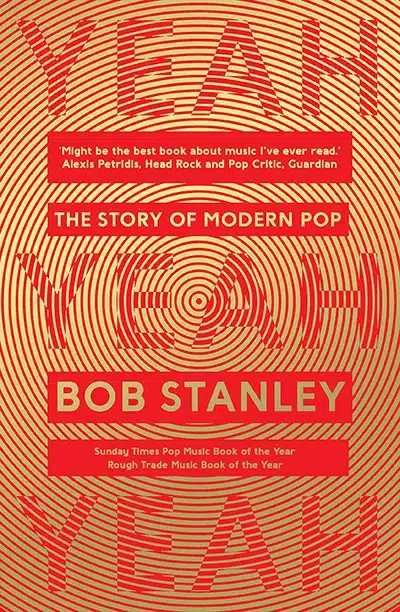
4. Yeah! Yeah! Yeah! The Story of Pop Music from Bill Haley to Beyoncé – Bob Stanley (W. W. Norton & Company, 2014)
Like its prequel, Let’s Do It, Bob Stanley’s Yeah! Yeah! Yeah! is a book that can make completely frustrating arguments sound reasonable. (Case in point: in the very first chapter, Stanley argues Bill Haley was the inventor of rock ‘n’ roll.) That’s part of the book’s greatness.
Encyclopedic, comprehensive, opinionated, enthusiastic, and filled with infuriatingly well-argued points. Yeah! Yeah! Yeah! is compulsively readable, covering a half-century of pop from rockabilly to millennial R&B with a unique zest. Even with Stanley’s level of knowledge, the prose is inviting and accessible. Despite distracting comments on artists’ physical appearance, this book is one of the greatest joys to read on this list.
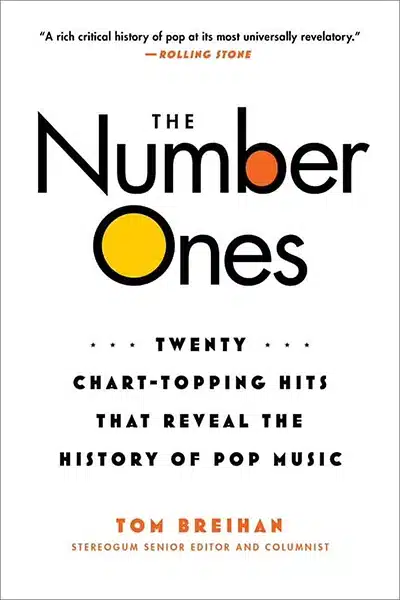
3. The Number Ones: Twenty Chart-Topping Hits That Reveal the History of Pop Music – Tom Breihan (Da Capo, 2022)
I’ve never come across a book that made the Billboard charts sound so worth taking seriously, but The Number Ones majorly delivers. With some of the best and most dynamic and absorbing whirlwind storytelling of any music book I’ve read, critic Tom Breihan’s book convincingly singles out 20 Billboard Hot 100 #1 hits for their influence on pop music.
Many of his picks are unexpected; in other words, this is not a typical canon. From Chubby Checker’s “The Twist” to BTS’ “Dynamite”, the records that Breihan picks illuminate shifts in music and culture, including changes in radio, television, and the Billboard charts themselves. The Number Ones has some of the most effusive writing on pop and its importance that I’ve ever read.
2. Let’s Talk about Love: A Journey to the End of Taste – Carl Wilson (Bloomsbury, 2007)
The concept sounds curious, to say the least: a book attempting to understand and explicate the greatness–or at least the significance–of a much maligned album for a series on classic albums. It works spectacularly well. Critic Carl Wilson’s book on Céline Dion’s blockbuster 1997 album, Let’s Talk about Love, is rigorously analytical, questioning plenty of assumptions along the way and infectiously procuring joy with its inquisitiveness.
Like the authors of Switched on Pop, Wilson examines pop music through an outsider’s perspective. Still, his exceptional incisiveness in his investigation of taste and fandom makes for one of the most striking and illuminating music books I’ve ever read. Let’s Talk about Love is an absolute delight.

1. Shine Bright: A Very Personal History of Black Women in Pop – Danyel Smith (Roc Lit 101, 2022)
Though less straightforward in its focus than more linear surveys on this list, journalist Danyel Smith’s blending of genres in Shine Bright consistently shows her love of pop music–especially Black women’s multitudinous contributions therein. Part memoir, part love letter to Black pop, Shine Bright does not claim to be definitive, but it gets to the heart of pop music, its artists, and its industry better than just about any book I’ve ever read, especially in its audiobook.
Smith is emphatically not an outsider to pop music, and her immersion in the genre since childhood, along with decades of experience at publications like VIBE and Billboard, makes her an ideal chronicler of the devastating struggles and triumphs of Black women in pop. Her writing is brilliantly sharp, and she credits “the surge and strength of Black pop” for helping her hold her own in a racist and sexist music industry.
Her insights on phenomena like pop crossover and the “cheesy” 1980s and her extension of the definition of pop to include the likes of gospel great Mahalia Jackson and opera titan Leontyne Price all enhance the book. A celebration of pop music with the least stilted, most impassioned writing on this list, Shine Bright is a genuine, heartfelt joy.
