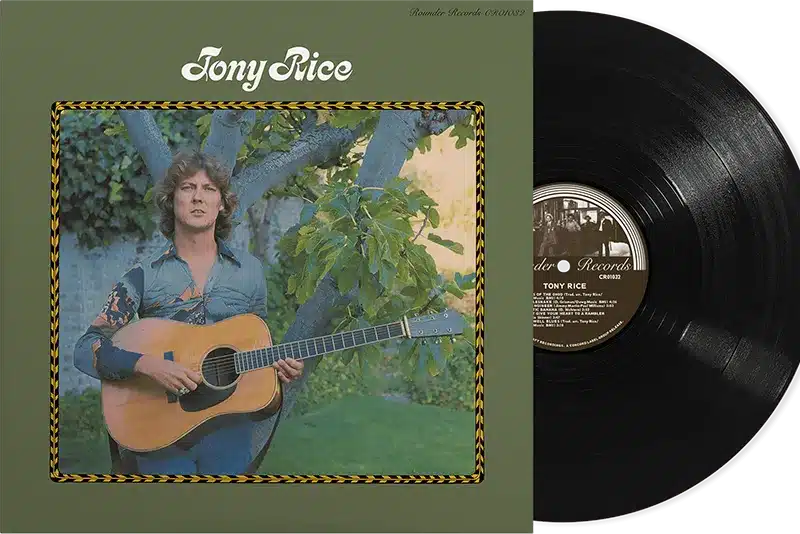
Like any purists, those in bluegrass music can be prickly. Since its early years, bluegrass—like its parent genre, country music—has exponentially expanded its audience and sonic palette while grappling with change in the music and its surrounding contexts, especially in this millennium. However, an album like the new reissue of acoustic guitarist Tony Rice’s self-titled 1977 LP caters to both longtime bluegrass connoisseurs and genre newcomers in its mix of styles. The question is, how successful is it?
The album, Rice’s third studio release as a solo artist, marks a transitional phase between early bluegrass from the likes of Bill Monroe, Flatt and Scruggs, and the Stanley Brothers and later, more polished acts like Alison Krauss and Nickel Creek. In its time, its musical ideas were fresh and innovative, but also steeped in older bluegrass sounds and styles.
Today, the record is finally available for a new generation’s discovery for what would be Rice’s 75th birthday, on vinyl or streaming. Bolstered by Kevin Gray’s all-analog mastering, the acoustic recording sounds clean and welcoming. Hearing the mandolin and guitar picking on tracks like “Mr. Engineer”, co-written by bluegrass giant Jimmy Martin, and “Plastic Banana” is thrilling, especially as the album has been out of print for over 40 years.
The performances usually sound steady and measured, with Rice’s mellow, nasal baritone singing lead on five songs and the small group of bluegrass all-stars, including dobroist Jerry Douglas, sounding virtuosic but more even-tempoed than earlier bluegrass legends on the seven instrumentals.
These musicians were known for embodying the “new acoustic” style of bluegrass, which combined earlier bluegrass chestnuts with newer pieces and ideas. For example, “Rattlesnake”, written by mandolinist David Grisman, moves between different meters and tempos while remaining accessible to contemporary listeners. On the other hand, versions of the instrumentals “Eighth of January” and “Big Mon” by bluegrass patriarch Bill Monroe sound classic, with virtuosic soloing and interplay between stringed instruments especially marked on these tracks.
The record also marks a shift in Tony Rice’s career, as Rice, working with bands like the New South and Grisman’s group, was transitioning into making more solo and group recordings under his own name and leadership, eventually leading to such renowned recordings as Church Street Blues in 1983 and collaborations with the likes of Norman Blake.
The generally moderate tempos and dynamics of this recording might make Rice sound like he’s modernizing rather than carrying on tradition. However, compared to bluegrass today, this album sounds like a welcome reminder of the roots of the styles, past and present.
The musicianship is stellar throughout the album, including performances of Rice, Douglas, Grisman, and fiddler Richard Greene. Traditional murder ballads like “Hills of Roane County” and “Banks of the Ohio” further anchor Rice’s repertoire and performances in the past.
If one can fault anything about Tony Rice as an album, it’s that in the long span of bluegrass history, it sounds tentative in its boldness, as if it fits awkwardly between eras, even with its daring repertoire and ideas.
Still, for bluegrass experts, this LP is a must-own. AllMusic asserts that “hardcore bluegrass fans will probably consider it his best”, but most music lovers should find it enjoyable and informative about bluegrass in its time, if not essential.
Tony Rice, who died in 2020, was an epochal guitarist, and his work with the likes of Douglas, Grisman, and Ricky Skaggs has long held a special place in the hearts of bluegrass lovers. This album may not always show Rice and some of his compatriots at their best, but it is very much worth a listen to remind listeners where bluegrass has been and where it can go.